Watch live sports legally in United States: Simple Bold guide for 2026
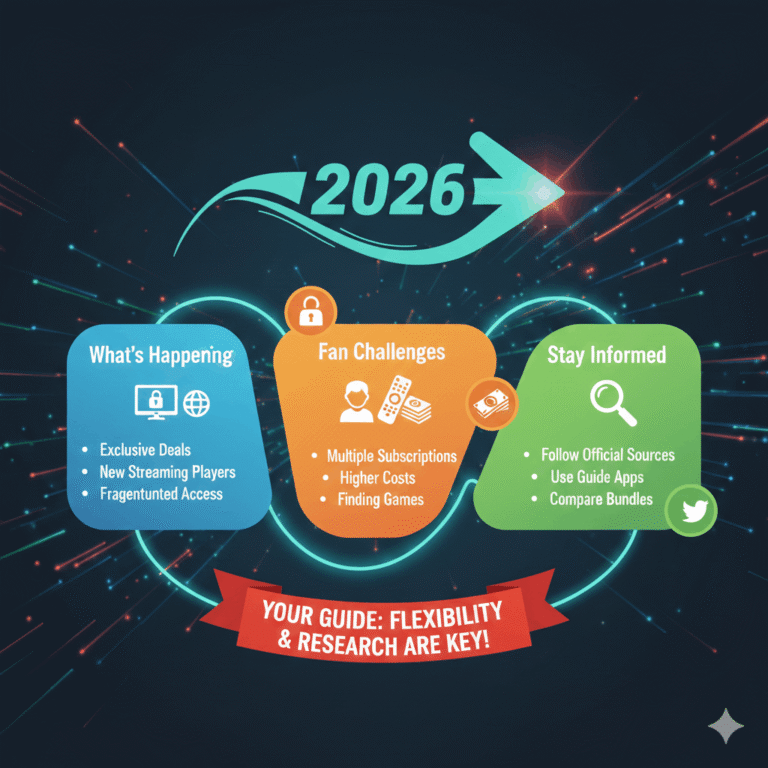
Sports viewing in 2026 can feel scattered. One app has the live feed, another has replays, and highlights show up later on a different screen. If you’re trying to watch live sports legally in United States, the real win is building a setup that matches how rights work, how blackouts work, and how you actually watch at home.
This guide is built for anyone who wants to watch live sports legally in United States without getting pulled into sketchy “free” claims, confusing logins, or surprise billing after a trial.
Start with rights: what “legal” really means in the US
If you want to watch live sports legally in United States, the word “legal” is mostly about broadcast rights and licensing. A game is legal to stream when the service has authorization to show it in your region and on that device type.
Rights deals split in a few ways: national broadcast, local market coverage, league subscriptions, and streaming bundles that package channels together. That’s why the same sport can be available in one app for one person, then blocked for someone else across town.
Rights and licensing in plain language
To watch live sports legally in United States, think of rights as permission slips. A league sells permission to show games to a network or streaming partner. That partner then controls where the match appears, which subscription tier includes it, and whether replays arrive right away or later.
This is why “one app for everything” rarely works. Sports platforms are shaped by contracts, not convenience. Once you accept that, choosing apps gets easier.
Blackouts, local markets, and geo restrictions
Blackout rules frustrate people who want to watch live sports legally in United States, yet they’re part of how local market deals stay valuable. A local RSN, a national network, and a league package may each hold different pieces of the same season.
Geo restrictions can apply even inside the same country. Your zip code, your network affiliate area, and the service’s terms of service can change what plays live, what becomes a replay, and what stays locked.
Pick your watch path: bundles, passes, and network apps
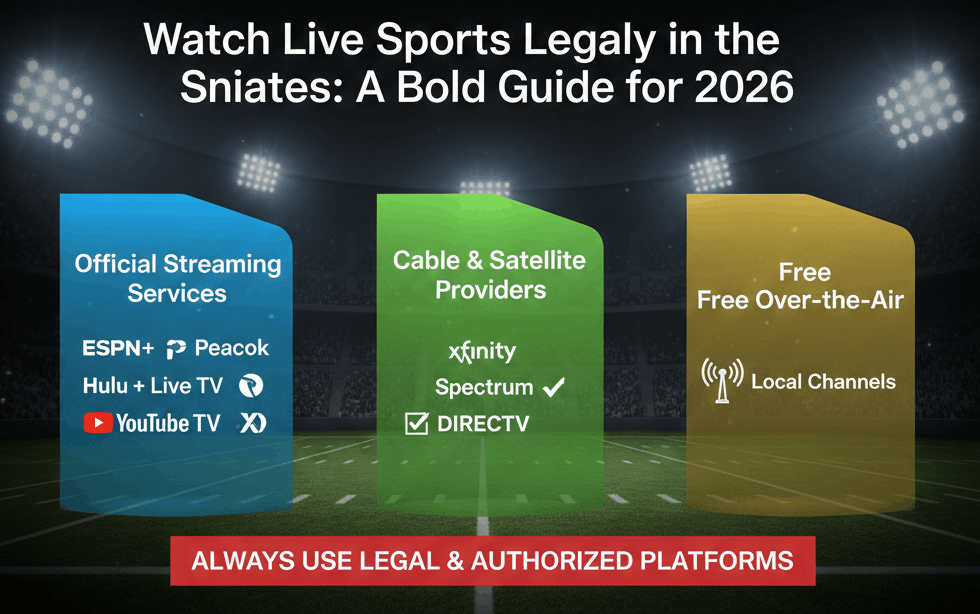
To watch live sports legally in United States, most people land in one of three paths. Each path solves a different problem: variety, depth for one league, or access through a TV provider login.
A clean setup often uses two layers: a watch layer for live games, and a follow layer for schedules, stats, and alerts. That pairing feels calmer than chasing every game through random searches.
Live sports TV streaming bundles
If you watch multiple leagues, a live TV streaming bundle is often the simplest way to watch live sports legally in United States. These services behave like cable subscription replacements, with channel packages, add-on sports tiers, and features like cloud DVR.
Look for practical features that match your routine: DVR, replay windows, concurrent streams for households, and device support (smart TV apps, Roku, Apple TV, Fire TV, game consoles). A bundle that works well on your living-room screen usually beats a cheaper option that forces you back to a phone.
This is where the supporting phrase Live sports TV streaming fits best: it’s the “one subscription, many channels” route that covers lots of sports in one place.
League subscriptions and League Pass-style products
If you mostly follow one league, a league subscription can be the most direct way to watch live sports legally in United States. These products usually focus on live games and replays, plus extras like condensed games, alternate camera angles, and archive access.
League Pass is a popular idea in this category. It can be a good match when you want consistent coverage of one league, yet blackout rules may still apply in certain cases. Before paying, check whether local market games are excluded, how quickly replays unlock, and how many devices can stream at once.
Network and broadcaster apps with TV provider login
Many people watch live sports legally in United States through a broadcaster app that uses TV provider login. That login acts as account verification: you prove you already pay for the channel through cable, satellite, or a live TV streaming bundle.
This path can be great when you already have access through a household plan and you want the same games on mobile interfaces while traveling. The main friction points are activation codes, password resets, and forgetting which email controls the subscription tier.
Premier League and football viewing in the US
A lot of readers want to watch live sports legally in United States premier league without guessing which app has the rights this season. Premier League access is shaped by territorial rights, so the correct answer depends on who holds the current US deal and which plan includes live matches.
A useful approach is to separate “watch the match” from “follow the league.” The watch side is usually a broadcaster or streaming partner. The follow side is often an official league app that handles fixtures, standings, stats, and alerts.
A steady setup for Premier League fans
If your goal is to watch live sports legally in United States premier league, start by picking the rights-holding path for live games, then pair it with a follow app for tables, player pages, and lineup alerts.
This setup avoids the common mistake: assuming an official league app automatically includes live matches in every region. In many cases, the official app is still valuable, just not the main watch destination.
US football and the “too many apps” problem
Plenty of people want to watch live sports legally in United States football, and the biggest pain point is fragmentation: national broadcasts, local market games, primetime windows, and different platforms for different matchups.
A practical solution is to build around your viewing habit. If you watch most games live on a big screen, prioritize device support and stable playback over flashy extras. If you rely on replays, DVR and replay availability matter more than live latency.
Free trials without surprise charges
If you want to watch live sports legally in United States free trial, free trials can help, as long as you treat them like a short test window with rules. Trials often come with trial eligibility limits, a cancellation window, and billing cycle triggers that can start earlier than people expect.
The calm way to approach a trial is to decide what you want to test before you sign up. Do you need DVR? Do you need a smart TV app? Do you need more than one stream at the same time? A trial is useful when you measure the right things.
A clean trial checklist in paragraph form
To watch live sports legally in United States free trial and avoid regrets, pick a service that carries the games you care about, then test playback on the device you truly use. If you watch on Roku, test on Roku. If you watch on a browser at work, test on a browser.
Track three details during the trial: stream quality (bitrate and stability), delay (latency compared to live), and replay support (cloud DVR or on-demand). These features matter more than marketing.
Billing, add-ons, and hidden friction
People lose money on trials when a bundle quietly needs an add-on package for the channel they want. That leads to confusion and the feeling that the trial “didn’t work.”
If you’re trying to watch live sports legally in United States, confirm the subscription tier and add-on requirements before you judge the service. A strong setup is rarely the cheapest base tier.
Reddit and “free sites” searches: how to stay on the right side
Many people search watch live sports legally in United States reddit after they hit a blackout, a paywall, or a missing channel. Reddit can be helpful for understanding what app carries what, yet it can also be a magnet for bad advice and risky links.
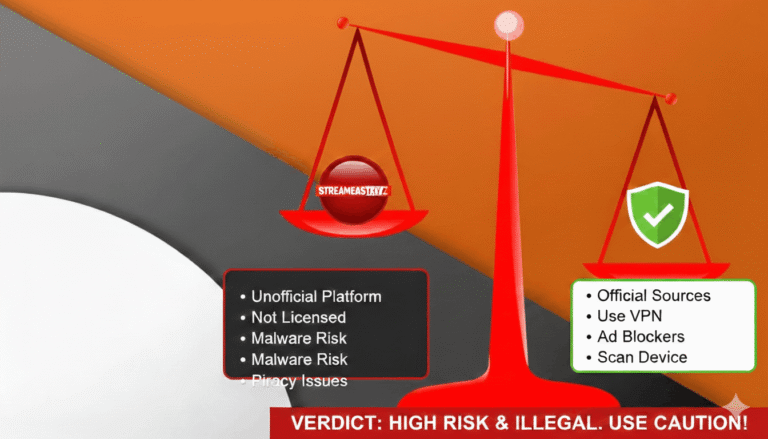
The same pattern happens with search phrases like Live sports TV streaming sites free and Best live sport streaming sites free. Those searches often pull you toward unlicensed streams, clone pages, and phishing traps.
Using Reddit without getting dragged into sketchy paths
If you want to watch live sports legally in United States reddit, treat Reddit like a discussion board, not a shortcut. Use it to learn the names of legitimate sports platforms and how people handle blackouts, device support, and replay timing.
Ignore anyone trying to move you into private messages for “special links.” That’s a common path into account theft, malware, or card fraud. A legal setup does not require secret invites.
“123 sports live streaming” and similar traps
People type 123 sports live streaming when they feel stuck. That phrase is tied to the unlicensed side of the internet, where pop-ups, redirects, and fake login pages are common.
If your goal is to watch live sports legally in United States, treat that search as a warning sign that your current setup needs a better rights-based option: a bundle with the correct channel, a league subscription, or a broadcaster app that matches your region.
What “free” can mean on the legal side
Free does exist in legal sports viewing, just not in the “every game, every league” form. Free can mean limited matches, short highlights, a trial period, or games shown on over the air channels with a simple antenna.
If you’re trying to watch live sports legally in United States, free is usually a feature of a larger business model, not a permanent replacement for paid rights.
Make your streams smooth on TV, phone, and browser
Once you’ve picked the right rights-holding path, the next step is making it play well. People often blame the service when the real issue is device setup, Wi-Fi strength, or an overloaded home network.
A stable viewing setup is part of being able to watch live sports legally in United States without constant buffering and frustration.
Device support and stream quality
If you watch on a smart TV, check whether the service has a native app for your platform, or if you’ll rely on casting. Casting can work, yet it can add delay and more points of failure.
On mobile interfaces, stream quality depends on Wi-Fi vs mobile data, plus how the app handles bitrate shifts. If the picture drops during big moments, test a different device or reduce competing network use during game windows.
DVR, replays, and time zones
Cloud DVR is one of the most valuable features for anyone trying to watch live sports legally in United States with a busy schedule. It turns missed kickoffs into a manageable routine, and it reduces pressure to hunt for clips later.
Time zones matter in the US. A match that starts in prime time on the East Coast can be early afternoon on the West Coast. Replay availability and DVR settings save you from missing the start just because work ran long.
Account access and household limits
If you share a subscription, check concurrent streams and household limits. Many services restrict how many devices can play at once, or how many streams can be active outside the home network.
If you want to watch live sports legally in United States as a family, a plan that supports your household is worth more than a cheaper plan that constantly kicks someone off.
Conclusion
To watch live sports legally in United States, build your setup around rights and habits, not hype. Pick one watch path that holds the permissions in your region, pair it with a follow app for schedules and stats, and use trials to test devices and replay support before paying long-term.
If you’re chasing Premier League, football, or multiple sports, the same rule holds: match the service to the rights, match the features to your routine, and skip the “free site” rabbit holes that turn viewing into risk. Watch live sports legally in United States with a calm setup, and the season feels simpler.